Join us!
Craft-my-Street Server: Build Your Dublin!
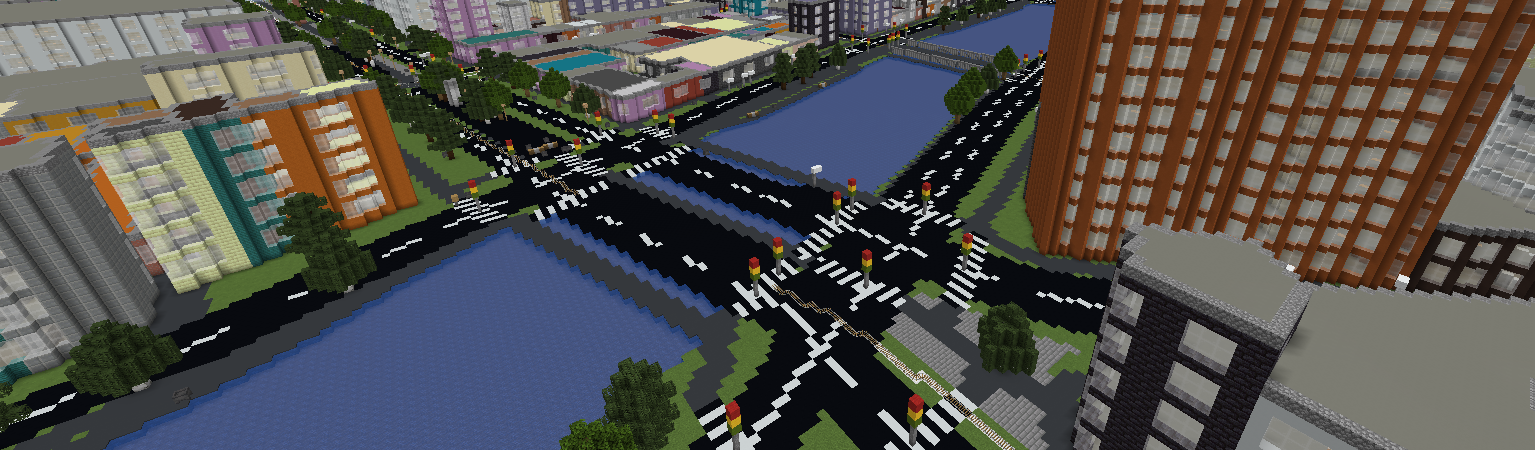
Ever imagined how a street, park, or even an entire area of Dublin could be transformed? Now's your chance to not just imagine, but to build it in Minecraft!
Join the Craft-my-Street Minecraft server and play alongside friends as you bring your innovative ideas for Dublin city to life. This isn't just about gaming; it's about giving young people a powerful voice in shaping the future of their communities, one block at a time.
Ready to start building? Here's how to join the adventure:
1: Register now! Please ensure parents/guardians complete the consent form if you are under 18.
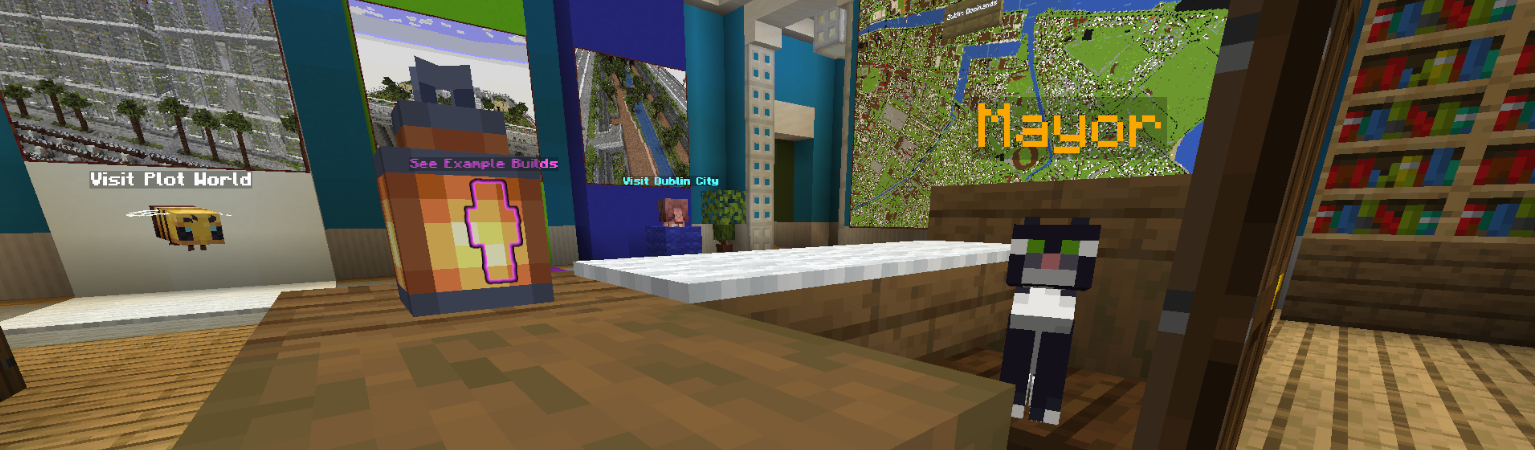
2: Claim Your Plot: Join our server and find your unique plot in a real-world replica of Dublin.
3: Build & Explore: Let your creativity soar as you build your vision for Dublin. Explore the city, collaborate with others, and rank up through exciting challenges!
4: Invite Your Crew: Share the fun! Encourage your friends to register and join you in transforming Dublin.
Why participate?
The Craft-my-Street project, a research initiative from the UCD Spatial Dynamics Lab, empowers young people to actively contribute to urban planning discussions, particularly around sustainability and climate change. Your builds aren't just for fun; they're valuable insights that can help shape real-world policies and improvements.
This server has been created using OpenStreetMap data and Arnis
The project
CRAFT-MY-STREET Project is an SFI OurTech Challenge project that aims to bridge the worlds of gaming, learning and participatory decision-making processes for climate action. The project’s goal is to amplify young people's voices in society by providing playful experiences. Which is essential for addressing pressing societal challenges, including climate change and sustainability.
The project will drive capacity building and knowledge transfer, addressing crucial societal issues such as climate change and sustainability. Additionally, it will promote digital transformation in the public sector by using data and digital technologies in emerging media popular among young people. Our solution is a web-based platform which uses gamified participatory processes as a communication and feedback channel between the public sector and young citizens.
The solution
Our solution centres around the development of a Playful Participatory Planning System (P-PPS). Craft-my-street platform will become a user-friendly web-based tool for educators and local authorities that allows for the creation of site-specific Minecraft virtual spaces. Minecraft has been selected due its popularity and scalability when involving schools in the process of engaging with young citizens. A big strength of this tool is that it leverages existing open-source and official geospatial data. This means it's not just a tool; it changes how we approach learning and engagement.
Our Stakeholder Engagement
Here you can view our stakeholder engagment to date.
Pilot
Craft-my-Street (CMS) Pilots
How does CMS work?
The Craft-My-Street game-based approach aims to engage young people in decision-making processes using a combination of digital and analogue games. A game world generator called Terra Tinker allows for the creation of site-specific Minecraft worlds based on real-world data, encouraging young people to address local challenges. The Hybrid Game Approach combines Minecraft and analogue games to provide a balanced learning experience, while the Gameplay Analytics component helps LAs analyse consultation outcomes in a data-driven manner.
CMS Pilots
The CMS team has tested this game-based approach with primary and post-primary schools, conducting in-class activities that involve playing both analogue and digital games. A total of 210 children and young people played in 8 site-specific Minecraft worlds. Other successful pilots have been developed as part of the project’s activities, such as the NBScraft that was organised during the Dublin Climate Action Week 2024 in collaboration with Fingal County Council (FCC). The ideas shared by the children will support the development of the Swords Local Area Plan.
Pilot structure
Local authorities in Ireland are making active efforts to ensure their plans are inclusive and representative, integrating community input since the early stage of the process. The CMS team is keen to collaborate with them in exploring new opportunities to test our approach and tools to engage children and young people in upcoming public consultation processes. Each pilot project will be developed in close collaboration with the local authority overseeing the consultation. These projects will not only gather data relevant to the process, but also contribute to refining and enhancing the individual components of CMS currently available for testing.
The pilot will be implemented in four phases over a period between 3 to 6 months.
Workshop preparation
The CMS team will collaborate closely with the local authority to identify a spatial challenge and engage local communities for the age-specific consultation process. This will include selecting schools, community centers, and libraries to host the activities. The following resources will support this phase:
a. Capacity-Building: Training and resources for local authorities officers and teachers are available to help in the game creation using the CMS game design framework and facilitation of the game-based approach. b. Hybrid Game Approach design: Ready-to-use analogue games are available on our website (craftmystreet.com) to bridge from real to virtual worlds in Minecraft through collaborative gameplay. New games can be developed for ad-hoc complex spatial challenges. c. Online game world generator: A beta version of Terra Tinker platform has been launched to create custom Minecraft worlds of the focus area using open geospatial data.
‘Space & Voice” Workshops
hildren will play together using analog games and custom Minecraft words. These activities are expected to increase civic participation among young people, enhance climate literacy and gather their perspectives on the specific spatial challenge;
Data analysis
The Gameplay Analytics will provide the means for local authorities to review and debrief gameplay sessions in a robust and data driven way. Custom server plugins are used to monitor participant actions while they are playing Minecraft. This data is collected, logged and displayed using various data visualisation techniques, such as heat maps, network diagrams, and temporal-spatial analyses, to represent player behaviour and environmental impacts.
Audience & Influence events
Children will present their ideas and visions to their local communities. These events will facilitate dialogue and feedback between the children, parents, community members, and local authorities representatives, showcasing the potential of a game-based approach for participatory urban planning and youth engagement.
Pilot cases
Swords, Final - September 2024
Smart Docklands, Dublin - Pilot Project Award 2024
Workshops

As part of the project, we conducted a number of workshops with stakeholders (teachers, local authorities, researchers etc.) to showcase, educate and gather feedback to help us design our platform (P-PPS). A timeline of the workshops is provided below.
Workshops Timeline
Workshop 1, 2 & 3 - Gameplay design
Details
October 2023
Iterative process designing game mechanics for multiplayer online activities which promote crowdsourcing and education and made them available as templates for different game-based applications (digital and analogue).
Workshop 4 & 5 - Sense-making
Details
June 2024
Employing data mining techniques and gameplay metrics to transform players’ designs and interactions in the game environment into spatially referenced information that can be presented as quantitative 2D and 3D data and qualitative metadata, which will be later validated to be used as valuable inputs for policies.
Workshop 6 & 7 - Resources
Details
October 2024
We will work with our target stakeholder groups over two workshops to create resources on how to use these specialised game environments and mechanics for a variety of applications (e.g. engaging young people with disabilities in public service design, adapting to potential effects of climate change in the local area, etc.).
Workshop 8 - Pilot Testing
Details
September 2024
In this workshop the Minecraft game was used as a tool for children to learn about and create nature-based solutions for Swords. This interactive session invited children between 8 and 16 years old to explore Swords in Minecraft and collaboratively design their neighbourhood. More details about the workshop More information about Dublin Climate Action Week 2024
Resources
Analog Games
Craft My Coast
Carbon Neutrality
Happy Village
Craft My Shore Game
Craft My Shore is a turn-based strategy game where you’re tasked with protecting the city from the encroaching sea.
- Each turn you have 6 movement tokens. Buildings (red) cost 6 to move, terrain cost 2 (yellow), and vegetation (green) cost 1.
- Your task is to protect the buildings from the approaching sea.
- Every turn the sea will progress towards the city. Over time this rate will increase with more and more water threatening the city.
- At the end, you can review each turn, and download your game's end state. We’d love to see these. Upload them below with your feedback.
We’d love to hear what you think. Fill out your feedback here.
Craft-my-Game Prototype
We are currently developing the 'Craft My Game' approach, where users will be able to create custom games using a simplified criteria selection framework. A current prototype of the 'Craft my Game' tool is now avaiable for use.
Alternative Link!
The team
-
Dr. Chiara Cocco
Principal Investigator, UCD School of Architecture, Planning and Environmental Policy
-
Dr. Gabriela Martinez Sainz
Co-Principal Investigator, UCD School of Education
-
Bairbre Meaney
Societal Impact Champion, Department of Children, Equality, Disability, Integration and Youth (DCEDIY)
Broad team
UCD School of Architecture, Planning and Environmental Policy
UCD School of Education
External Collaborators
CRAG Participants
Former Team Members



The project is funded with the financial support of the EU Commission Recovery and Resilience Facility under the Science Foundation Ireland OurTech Challenge Grant Number 22/NCF/OT/11150